

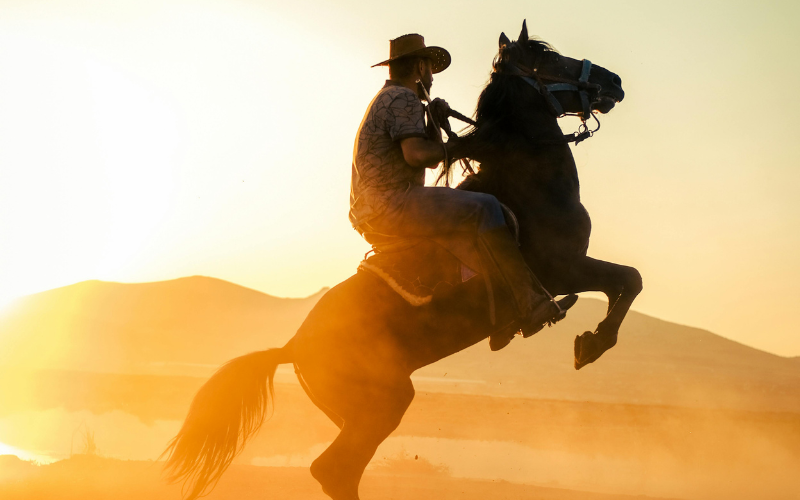
Few figures in American history have benefited from better PR than Billy the Kid.
In reality, he was a young, penniless drifter caught up in a bloody and brutal conflict on the New Mexico frontier. In legend, he became a sharp-shooting, charismatic outlaw – equal parts villain and folkloric hero. The gap between the man (or rather boy) and the myth is a perfect case study in early relationship management, fuelled not by agencies or press releases, but by newspapers, politics, and public fascination.
So how did Billy the Kid become one of the most recognisable names of the Wild West? It’s a story as much about media, messaging and myth-making as it is about crime.
From Henry McCarty to Billy the Kid
Billy the Kid was born Henry McCarty in New York in 1859. By his teens he had adopted several aliases, most famously William H. Bonney, and drifted through the American Southwest as a ranch hand, gambler and occasional thief.
His real entry into the history books came through the Lincoln County War, a violent dispute in New Mexico between rival business factions battling for economic control. Billy aligned himself with one side, he so-called “regulators”, and soon found himself branded an outlaw by local authorities aligned with the opposing faction.
This is where the PR machine, unrecognised but very real, began to turn.
Newspapers, like The Las Vegas Gazette, seized on the story. A young gunslinger, handsome, dangerous, elusive. Perfect copy.
The name “Billy the Kid” transformed him from a minor criminal into a character.
And characters sell.
The press turns a criminal into a legend
In the late 19th century, sensationalist journalism was thriving. Frontier papers needed stories that would grip readers in the East. Danger, lawlessness, romance, violence, the Kid ticked every box.
Reports exaggerated his crimes, inflated his kill count (famously claiming 21 victims, one for every year of his life) and crafted an image larger than life. The more he evaded capture, the bigger his reputation grew.
He wasn’t just a fugitive; he was a headline.
Sheriff Pat Garrett, the man who eventually killed Billy the Kid in 1881, also understood the importance of shaping the narrative. Shortly after Billy’s death, Garrett published The Authentic Life of Billy the Kid, presenting himself as the lawman who finally brought order to the chaos. In doing so, he didn’t erase Billy’s story, he cemented it.
Even in death, the PR worked.
Villain. Victim. Hero
What makes Billy the Kid such a powerful case study in reputation is how open to interpretation he remains.
To some, he was a ruthless killer. To others, a teenager caught in corruption and political power struggles. To many, he became a symbol of rebellion, a kind of Wild West Robin Hood figure standing against authority.
This flexibility is what gives legends longevity. Every generation reshaped Billy to fit its own narrative, in dime novels, Hollywood films, folk songs, modern tourism across New Mexico, and even Netflix docudramas. Each retelling added another layer to the brand, blurring the line between fact and fiction just a little more.
In PR terms, Billy the Kid achieved something most brands crave, cultural immortality.
The ultimate lesson in perception
Billy the Kid lived just 21 years. His real life was short, messy and violent. But his reputation has lasted more than a century.
His story is proof of a simple truth. Your legacy is rarely built on reality alone. It is built on what is repeated, printed, shared and believed.
Today, social media, headlines and viral narratives play the same role that frontier newspapers once did. The channels have changed; the mechanisms have not.
It isn’t just history that decides the past, it’s the story that survives. And the best stories are rarely the most accurate, they’re the most compelling. Billy the Kid didn’t just live a life, he became a narrative. And narratives, once unleashed, are hard to kill.
Written by: Thomas Hale
Read our next blog on: Is your PR strategy is missing comment opportunities?