

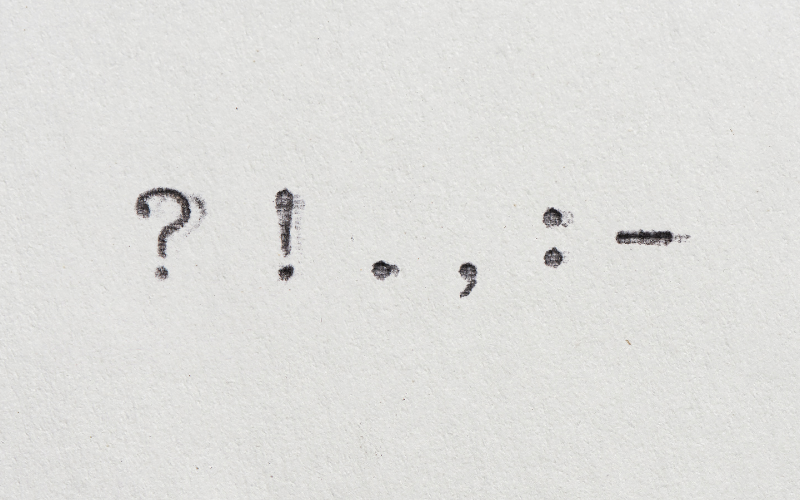
Some people are learning about the em dash for the first time—they’re learning it’s a red flag.
The em dash is becoming the tell-tale sign of ChatGPT-written text. Writers and content creators are now actively avoiding (or deleting) it at all costs for the sake of credibility.
But em dashes are not new; in fact, they’re hundreds of years old and a useful piece of grammar. Pick up any literary great and you’ll see they are commonly littered throughout the works of Jane Austen, James Joyce and other authors not beginning with J.
What is an em dash?
The em dash is the theatrical older brother of the en dash and hyphen.
The em dash is the length of an M and is used as an enthusiastic comma or a pause for dramatic effect. It can be used to segment a section of a sentence—the same as a comma or brackets could—to provide extra information and emphasis. They’re clear and add a punch.
What is an en dash then?
The en dash, the length of an N, is the forgotten middle child. Not easily created with the keyboard, the en dash is used less often but is grammatically used to replace the between, from or to, such as “working 9–5”. What a way to make a living.
Where does a hyphen come into this?
The hyphen is the lovable youngest child; it shows up everywhere without a care in the world. Hyphens are used to link words together and are often used in place of an en dash for ease.
Why is ChatGPT using them?
AI has hijacked the em dash, littering it through any piece of text like a glowing beacon. It’s making human writers scared to use a punctuation mark they’ve used fondly—and appropriately—since college.
Why? Well, AI scours the internet in search of existing credible texts and books—that is where you find the em dashes.
Should I use them?
So now the dilemma stands: continue using correct and useful punctuation to emphasise your writing or stop using it for fear of looking like a you’ll fail the Turing Test?
What’s your take? Has AI made you change your writing?
Written by: Jasmin Meadows
Read our next blog on: How to be seen and heard when news avoidance is increasing (bclear.co.uk)