

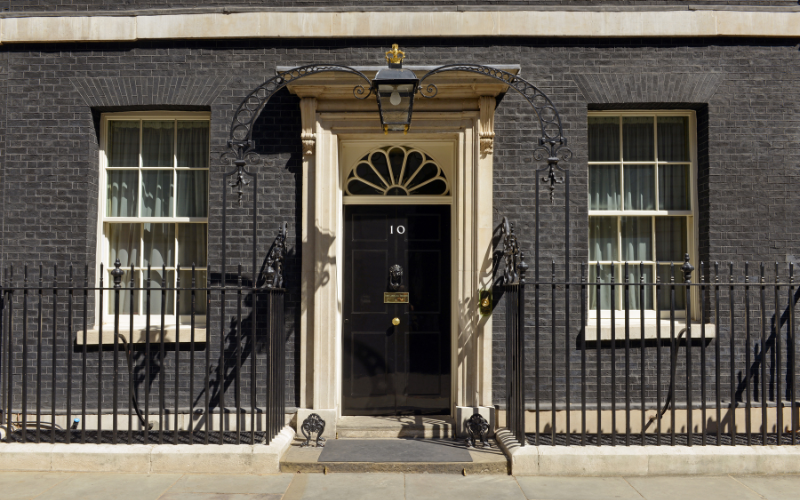
With the prime minister having announced his resignation on Monday morning, it seems like the last few months of “Starmer drama” are coming to an end.
Keir Starmer has gone from landslide victory to reluctant resignation in just two years. Regardless of what you think of his policy decisions, him and his team never seemed to get a handle on their communication strategy. His successor will need to learn from his mistakes if they want to avoid the same fate.
Here’s how your business could learn too:
The fall of trust
Who? Starmer was elected to Parliament in 2015 after serving as Director of Public Prosecutions. Once the Labour Party portrayed him as a sensible and steady defender of human rights who was previously untainted by being a politician (whom only 9% of the populationtrust to tell the truth), then his record had to back it up.
Early scandals involving free gifts, however comparatively minor in price tag, spoke to society’s fear about sleazy politicians being all the same. Once the Mandelson fiasco exploded, the shadow of the notorious “Prince of Darkness” had permanently extended over Starmer’s premiership.
Comms takeaway: When actions fail to align with branding, the communication gap leaves consumers feeling uncertain, losing trust and left to fill in the blanks with questions about whether that brand can pass scrutiny, of the parliamentary or public kind.
Communication chaos
What? For many commentators, the tides turned on Starmer’s leadership after the disastrous public reception of the cut to winter fuel allowance. Even when his government eventually u-turned, the damage had already been done.
Similarly, Starmer discussed lifting half a million children out of poverty in his resignation speech, as a consequence of the removal of the two-child benefit cap. But he didn’t commit to the policy until 18 months into leadership, standing firm that it wouldn’t be compatible with his government’s fiscal rules and even suspending the whip for seven Labour MPs when they voted against the party line.
Comms takeaway: Whether it’s scrapping the benefit cap, or restoring the winter fuel allowance, the public – or your consumers – might just be thinking, “I told you so?” You could be introducing brilliant changes, but if your communication doesn’t show that you believe in what you’re doing, consumers won’t believe in them either.
Timeline turmoil
When? Timing can be everything when it comes to projecting strong and stable leadership (and not of the Theresa May flavour). Speaking at London Tech Week at the start of this month, Starmer saidthat the government would “change the law” if social media companies “choose not to” restrict children’s access to explicit content.
A week later, he announces a full social media ban for under-16s. By that point, the policy appeared somewhat delayed and cautious, drawing some criticism that it was an attempt to gain back some ground in a potential leadership challenge or secure his legacy.
Comms takeaway: When deciding on a timeline for an announcement or news release, it’s vital to develop a clear strategy. You need to target your chosen audience: see how they are engaging with news, meet them where there are and be prepared to defend your choices.
Toolmaker
How? Former Mayor of Greater Manchester Andy Burnham is predicted by many to be the next prime minister, having won a decisive victory in the Makerfield by-election last week. Since the “King of the North” took on Whitehall over local Covid restrictions in October 2020, he has emerged as a more relatable alternative to Starmer, who is just as likely to post on X about scrapping VAR and fire back at critics as he is to post about policy change.
Starmer had a glimpse of this, when he started making a joke in his speeches about how many times he’d mentioned that his dad was a toolmaker. Yet TikToks of often overly-staged gags and montages of the prime minister in military helicopters seem to feature him pretending to be someone he’s not: someone cool. Instead, he could be leaning into the fact that he just isn’t that cool and having fun with it, interspersed of course with important policy updates.
Comms takeaway: In the age of AI, directing a slick production takes little time. But audiences want authenticity, insight and often a bit of playfulness, if the subject matter permits it. Removing any traces of a real human touch on your social media risks letting your brand and recent achievements fly under the radar.
Clear and cohesive
Why? As his time in office reaches its end, Starmer is keen to stress what his government has achieved. The list is not to be sniffed at, whatever you think of the individual policies, be it nationalising the railways, passing renters’ and workers’ rights legislation and reducing waiting lists and immigration. However, without a cohesive story behind them, and overshadowed by u-turns and doom-and-gloom early on, they haven’t stuck.
Comms takeaway:A lack of clarity in your communication and honesty in your reasoning can sink a proposal before it has a chance to get going. If people don’t know you’re doing it, you’re not doing it.
In the digital age, it is not enough for our leaders to make progress behind the scenes. They need to generate some buzz about it too, on the right platforms, at the right times and with the right key messaging. Businesses should heed the warning from Starmer’s exit and not let inconsistency get in the way of their goals.
Otherwise, they might just be left standing at a podium with Beethoven’s ‘Ode to Joy’ playing in the background.
Written by: Madeleine Browne
Read our next blog on: Have reactive comments lost their value?